Building Wealth in Wallingford: A Neighborhood Investment Guide |
North End Nate's guide to Wallingford, neighborhood investment, North End |
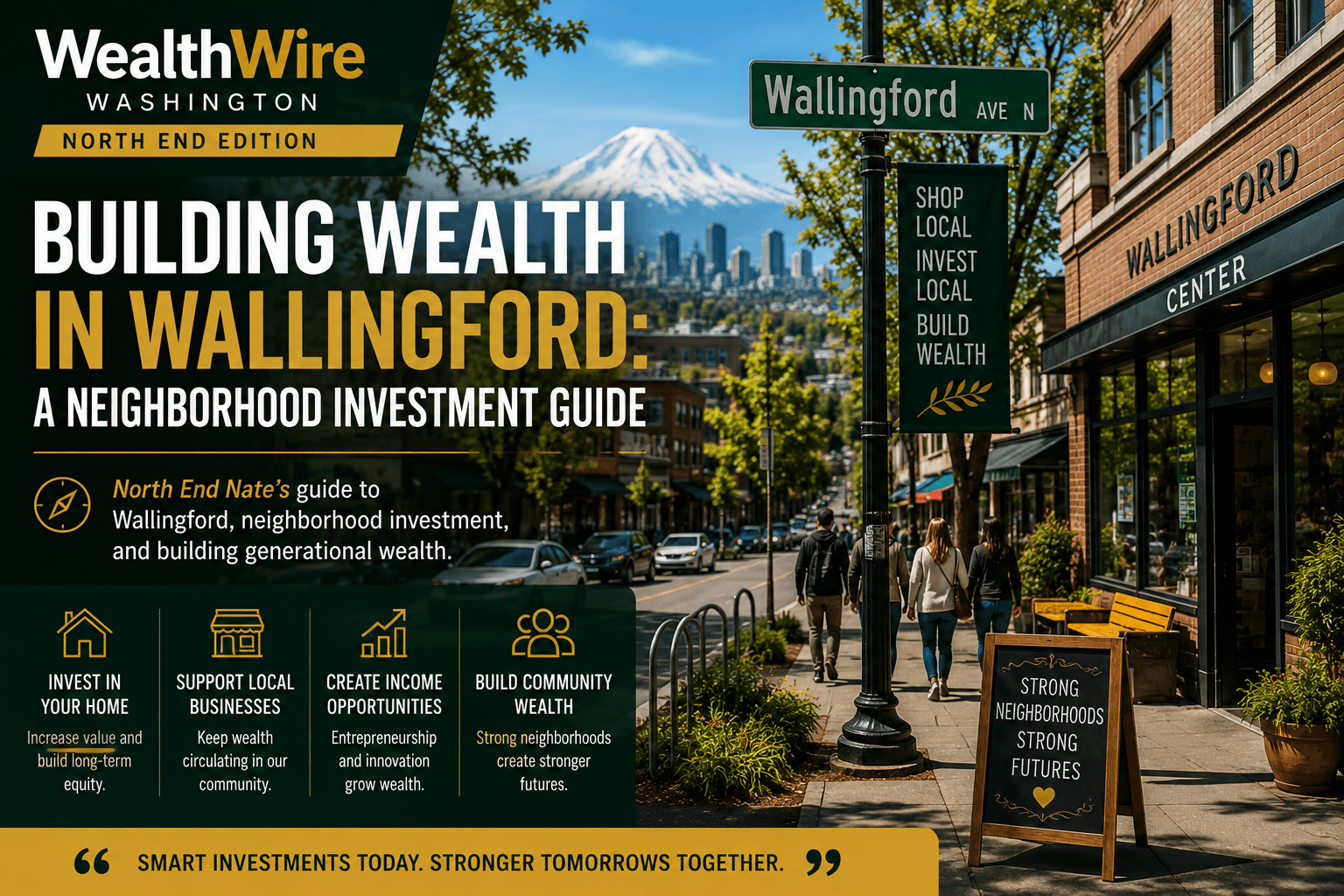
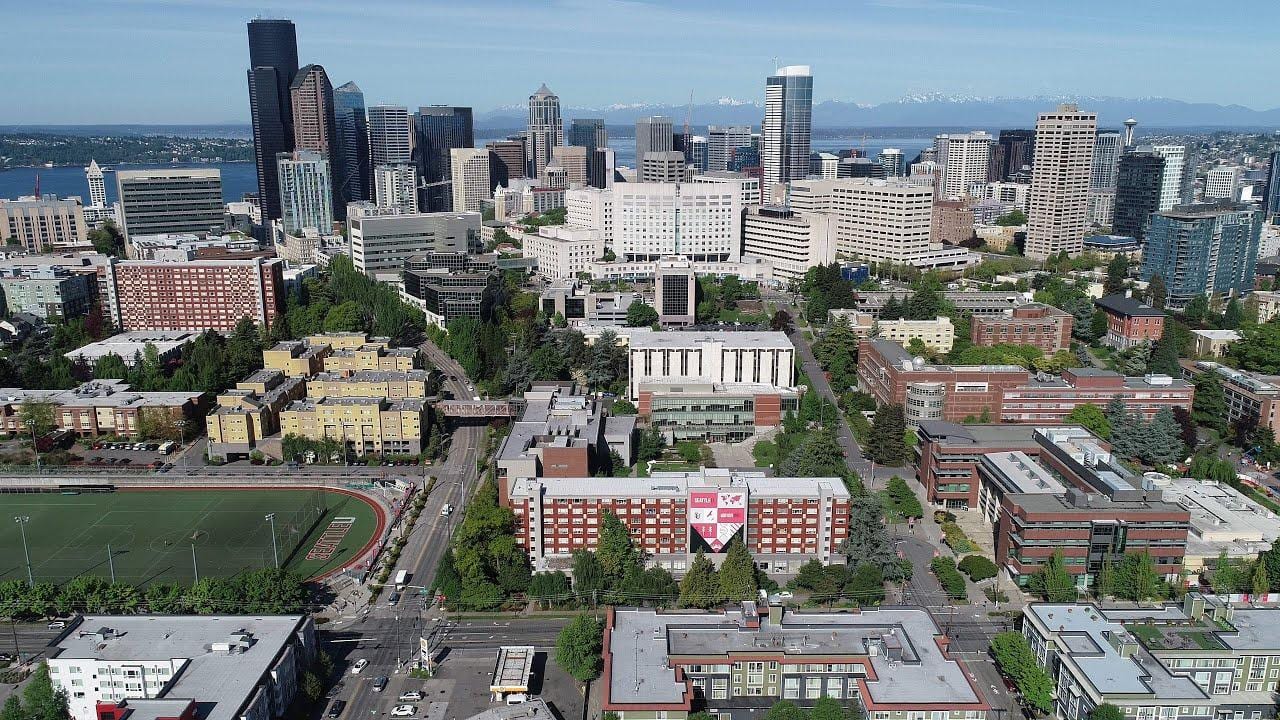
Wallingford has long been one of Seattle's most desirable neighborhoods, known for its tree-lined streets, walkable business district, historic homes, and easy access to Green Lake, the University District, and downtown.
While its character continues to attract new residents, Wallingford also offers valuable opportunities for those looking to build long-term wealth through smart neighborhood investment.
For homeowners, maintaining and improving existing properties can increase both livability and long-term value. Energy-efficient upgrades, accessory dwelling units (ADUs), and thoughtful renovations remain popular ways to maximize a property's potential while supporting Seattle's evolving housing needs.
For aspiring entrepreneurs, Wallingford's vibrant commercial corridor offers opportunities to launch neighborhood-focused businesses that serve local residents. Cafés, specialty retail, wellness services, professional consulting, and creative studios continue to benefit from strong foot traffic and a loyal customer base. Today's entrepreneurs can also leverage AI-powered tools for marketing, customer engagement, scheduling, and operations, making it easier than ever to start and grow a business.
Investing in Wallingford isn't limited to real estate. Supporting independent businesses, participating in neighborhood organizations, and building local partnerships all contribute to a stronger local economy. Every dollar spent with a neighborhood business helps circulate wealth within the community, creating jobs and encouraging future investment.
Wallingford's appeal lies in its balance of history, innovation, and community. Residents who take a long-term approach to ownership, entrepreneurship, and community involvement are well positioned to benefit as the neighborhood continues to evolve.
What This Means for YouBuilding wealth in Wallingford isn't about chasing the next trend—it's about making thoughtful investments in your home, your business, and your community. Small, consistent decisions today can create lasting financial stability while helping preserve one of North Seattle's most distinctive neighborhoods.
North End Nate's Tip: The strongest neighborhoods aren't just places where property values grow—they're places where residents invest in one another. |
66 Comments
Join the conversation
I'll say this — as someone who just moved to Wallingford from Beacon Hill, the community identity here feels strong in a way that surprised me. People actually know their neighbors. That's rarer than it should be in a city this size.
DevonQuinteroSame experience here — moved from Capitol Hill about three years ago and was honestly skeptical about the whole 'tight-knit neighborhood' thing. But people wave, they stop and talk, they actually show up to block parties. It's not performative either. Beacon Hill has a great community too but I get what you mean about this place feeling different.
That sense of community identity is something Wallingford residents work hard to maintain, and it's one of the reasons the neighborhood continues to attract people looking for something more than just a convenient address. Glad you found it!
The framing of 'small consistent decisions' is what I want more people to hear. Not every investment has to be a big dramatic renovation or a business launch. Showing up to a neighborhood cleanup or buying your lunch locally counts too.
Wallingford is great but parking on game days near Husky Stadium already tests my patience. If more businesses open on the corridor I just hope the city thinks seriously about how people actually get around that area.
Parking and multimodal access are real livability considerations that often get left out of neighborhood investment conversations, so thank you for raising it — more foot traffic is a net positive for businesses, but the city's transit and circulation planning genuinely needs to keep pace with corridor growth.
glenbrook_glenThe game day situation is already bad enough honestly. Stone Way and Wallingford Ave back up in ways that feel totally disproportionate to the neighborhood. More foot traffic is great but the infrastructure conversation really does need to keep pace.
Would be great to see a follow-up piece specifically about what business types are missing from the 45th corridor and what spaces are available. That kind of practical info would be super useful for anyone actually thinking about opening something here.
BryanK_NorthEndSeconding this hard. Even just a map of current vacancies and square footage would be useful. There's a lot of general 'great opportunity!' language but if someone is seriously exploring opening something, they need actual inventory info and lease rate ballparks, not just vibes.
Supporting neighborhood organizations is underrated. I joined the Wallingford community council a couple years ago mostly out of curiosity and ended up meeting some of my closest friends. And you actually get a say in what happens around here.
This is such an important point — community participation pays dividends that don't show up on any balance sheet, and having a real voice in your neighborhood's future is genuinely valuable. Thanks for sharing that.
The long-term ownership mindset is something more people should embrace. We've been here 18 years and watching our block gradually improve because neighbors actually care has been really satisfying. Not everything needs to be a quick financial return.
I appreciate that this isn't just 'buy property and watch it go up.' The framing around community involvement as a form of investment is something more people should think about. Showing up to neighborhood meetings matters too.
Showing up to neighborhood meetings, joining local organizations, and simply knowing your neighbors are forms of investment that don't show up on a balance sheet but absolutely shape whether a neighborhood stays great — so glad that framing resonated with you.
Denise W.Completely agree. I started going to the neighborhood association meetings a few years ago mostly out of curiosity and ended up actually caring a lot more about what happens here. There's something about showing up in person that changes your relationship to a place.
Walked past four empty storefronts on 45th last week so the 'vibrant commercial corridor' description felt a little generous to me. I want it to be vibrant but it takes more than optimism to get there.
What I'd want to know is whether Seattle's zoning changes around ADUs have actually made the process easier or just added more paperwork with a friendlier name. Curious if anyone has been through it recently.
The AI tools for small business operations point is underrated. A friend of mine runs a wellness studio nearby and says scheduling and marketing used to eat up half her week. That stuff has gotten way more manageable lately.
Sam OkaforThat tracks. I think people underestimate how much admin overhead used to kill small business momentum. If you're a one or two person operation and scheduling alone takes hours every week, that's real money lost. Good to hear it's actually helping in practice.
Your friend's experience is a great real-world example of what we were pointing to — AI-assisted scheduling and marketing tools have particularly leveled the playing field for solo operators and small wellness studios that can't afford to hire dedicated support staff.
I grew up in Wallingford and moved back five years ago after living in Capitol Hill for a decade. The neighborhood has changed but the community feel is still there. Seeing people talk about investing here in a real way — not just flipping houses — is genuinely nice to read.
The point about every dollar staying local is something more people should think about. I consciously stopped using big delivery apps for local restaurant orders. Just call them directly. More of the money actually stays with the business.
Historic homes are lovely until you own one. The maintenance costs on our 1922 craftsman are significant. I love the house but 'increases livability and long-term value' sometimes feels optimistic when you're replacing century-old pipes.
This reads a little optimistic to me. Energy upgrades and ADUs sound great but those upfront costs are not small. Not every homeowner in Wallingford has that kind of capital sitting around. Would be nice to see some acknowledgment of that barrier.
That's a completely valid point, and you're right that we could have been more direct about the financial barriers — programs like Seattle's Office of Housing loan options and utility-sponsored energy efficiency incentives can help offset some of those upfront costs, but they don't eliminate them entirely, and not every homeowner is in a position to take that leap.
skeptical_seattleiteThis is a fair point that gets glossed over a lot. There are some city programs and low-interest loan options for energy upgrades but they're not always easy to find or qualify for. A paragraph on that would have made this feel a lot more grounded.
The AI tools mention is interesting. A lot of small business owners I know around here have started using them for scheduling and social posts and it genuinely saves time. Still a learning curve but the barrier to entry for running a small business keeps getting lower.
GrantM_SeattleYeah the scheduling tools especially have been a game changer for small operators. A friend who runs a massage studio near 45th said she basically eliminated no-shows after switching to an automated reminder system. Still took her a few weeks to set it all up but once it was running she stopped thinking about it.
We opened a small skincare and wellness shop on 45th about three years ago and the loyal customer base here is real. Wallingford regulars are the kind of customers who tell their friends and actually come back. That word of mouth is worth more than any ad.
Word-of-mouth from loyal Wallingford regulars is exactly the kind of organic marketing no ad budget can replicate — your experience is a great real-world illustration of why neighborhood-focused businesses can thrive here. Thanks for sharing it!
We've lived two blocks from Green Lake for almost 15 years and the change in property values has been wild to watch. Glad we held on. The walkability factor alone keeps drawing people here and I don't see that changing anytime soon.
Claudia Ferrara15 years is the sweet spot honestly. We've been here about 12 and already feel it. The Green Lake proximity really is a different tier — people will always want easy access to that kind of green space in the middle of the city.
Wallingford and Fremont have such similar vibes but Wallingford gets overlooked sometimes. Green Lake proximity is a huge underrated perk. That alone attracts consistent foot traffic to nearby businesses year round.
NateFromFremontHonestly the Green Lake thing is so underappreciated. Year-round foot traffic is not something most neighborhoods can claim in Seattle weather. Even in January there are people out there walking the loop and stopping in at nearby spots. That kind of consistent draw is a real asset for any business close enough to benefit from it.
Totally agree on the ADU point. A friend of mine just finished converting her detached garage and the process took about 14 months start to finish. Long but worth it. She's now renting it to a UW grad student and covering a big chunk of her mortgage.
Laura Hendricks14 months is actually pretty reasonable from what I've heard — some people are running into 18+ months depending on scope and which reviewers they get. The mortgage offset part is the real story though. With rents what they are near UW, a well-done ADU basically pays for itself faster than most people expect.
This reads a little bit like a pep talk for people who already own property. What about renters? We live here too and 'invest in your home' doesn't really apply when you're paying someone else's mortgage every month.
North End Nate's tip at the end is the whole article in one sentence honestly. Neighborhoods don't stay great on their own, people make them that way.
Couldn't agree more — and honestly, that idea felt important enough that it deserved to be the closing thought rather than just another bullet point in the middle of the piece.
RonaldB_NorthEndThat tip stuck out to me too. It's simple but it's true. The neighborhoods I've seen decline were usually the ones where people stopped paying attention, not just where the market went sideways.
I've been to a few Wallingford neighborhood council meetings and it's genuinely encouraging to see how engaged residents are. That civic participation is part of what keeps the neighborhood feeling like an actual community instead of just a collection of expensive houses.
Energy-efficient upgrades are so worth it. We redid our insulation and windows two winters ago and our heating bills dropped noticeably. Plus the house is just more comfortable. It's not glamorous but it's a real return.
My neighbor just opened a small pottery studio near Stone Way and business has been really steady. People in this neighborhood genuinely want to shop and experience things locally. It's a different vibe than a lot of other parts of Seattle.
That's a great example of exactly what the article describes — neighborhood-focused businesses thriving because residents here genuinely prioritize local experiences. Wishing your neighbor continued success with the studio!
Honest question — how realistic is it to open a small business on 45th right now? I've watched a few spots sit empty for a while and rents have to be pretty steep. Would love to see more specifics on what's actually viable.
Priya NandakumarI've wondered the same thing. A few of those empty storefronts on 45th have been sitting for over a year which makes me think the rents don't quite match the foot traffic reality. Would love to see actual numbers on what small operators are paying per square foot there.
That's a fair and honest pushback — commercial rents on 45th do present real challenges, and service-oriented businesses with lower overhead (think consulting, wellness, or creative studios) tend to have a more realistic path to viability than retail concepts requiring heavy inventory. It's worth doing detailed local market research before committing, and connecting with the Wallingford Chamber or neighboring business owners can give you a much clearer picture of what's actually penciling out right now.
Would love to see more specifics on what kinds of businesses are actually thriving in the commercial corridor right now. 'Cafés and wellness services' is pretty vague. Are there vacant storefronts? What's the actual foot traffic like compared to pre-pandemic?
Priya NairGood questions. From what I've seen walking 45th regularly, foot traffic feels pretty solid on weekends especially near the Meridian stretch. There are a few vacant spots but not a ton. Would genuinely love a more data-driven breakdown though — the vague category lists don't tell you much about what's actually sustainable here vs. what keeps turning over.
Moved here from Colorado two years ago and I was honestly blown away by how walkable the 45th Street corridor is. We barely use our car on weekends. That alone feels like a quality of life investment.
That walkability is one of Wallingford's most underappreciated assets — and you're right that fewer car trips is absolutely a quality-of-life investment that compounds over time. Welcome to the neighborhood!
The part about every dollar spent locally circulating back into the community is so true. I try to do all my coffee and grocery runs on 45th just for that reason. It really does feel different when you know the owner.
That personal connection to the owner really does change the experience, and it's exactly the kind of relationship that keeps neighborhood commercial corridors healthy over time — thank you for putting your dollars where your values are.
The tip at the end from North End Nate is actually pretty solid. The neighborhoods that feel the best to live in are the ones where people know each other and support local spots. Green Lake and Wallingford have that and it's worth protecting.
That community fabric is absolutely worth protecting, and it's encouraging to hear readers recognize it — that awareness itself is part of what keeps it alive. Thanks for the kind words about North End Nate's tip!
I appreciate the positivity but let's be real — Wallingford property values are already so high that 'building wealth' through homeownership is basically only accessible to people who already have wealth. Not everyone is starting from the same place.
ADUs sound great in theory but getting through the permitting process in Seattle is no joke. Anyone who says it's straightforward has either never tried or hired a very patient contractor.
That's a fair and honest point — Seattle's permitting process can be a real hurdle, and anyone considering an ADU should factor in time and professional guidance from the start. The financial upside can be worth it, but eyes-open planning matters.
Brenda Cho14 months would have felt like a gift to us. We started our ADU process and hit delays at basically every stage — site review, design revisions, utility connections. Just the permit approval alone took longer than we expected. Great outcome in the end but 'straightforward' is definitely not the word I'd use.
We added an ADU to our place on Densmore a couple years back and it genuinely changed our financial picture. Took a while to navigate the permitting but totally worth it. Love seeing this kind of practical advice directed at Wallingford specifically.
Thank you for sharing this — your experience on Densmore is exactly the kind of practical proof point that makes the ADU conversation real for other Wallingford homeowners who are weighing the permitting process against the long-term financial upside.
Teresa M.The permitting part is real — we looked into it and the timeline alone was kind of daunting. Glad to hear it paid off for you though. Did you go through the city's pre-approved ADU plans or do a custom build?
The part about circulating dollars within the neighborhood is so true. I try to do all my coffee runs and grocery stops on 45th instead of driving to a chain somewhere. It adds up more than people realize.
We've lived on Corliss Ave for almost 12 years and this really resonates. We added an ADU to our backyard a couple years ago and it's been one of the best financial decisions we've made. The rental income helps a lot, but honestly the bigger surprise was how much it pushed us to clean up and improve the whole property.
Sandra K.The ripple effect you're describing is real — a friend did something similar and said the ADU project basically forced them to deal with deferred maintenance they'd been ignoring for years. Ended up redoing the fence, repainting, fixing drainage issues. The property looks completely different now. Sometimes a big project is the push you need.
Love hearing this firsthand — and that secondary benefit you mentioned, the way the ADU motivated broader property improvements, is something a lot of homeowners don't anticipate until they're in the middle of it. Thanks for adding that real-world perspective!