Wallingford Wealth: Why This Classic Neighborhood Continues to Reward Long-Term Investors |
North End Nate's guide to Wallingford, real estate investment, and North Seattle |
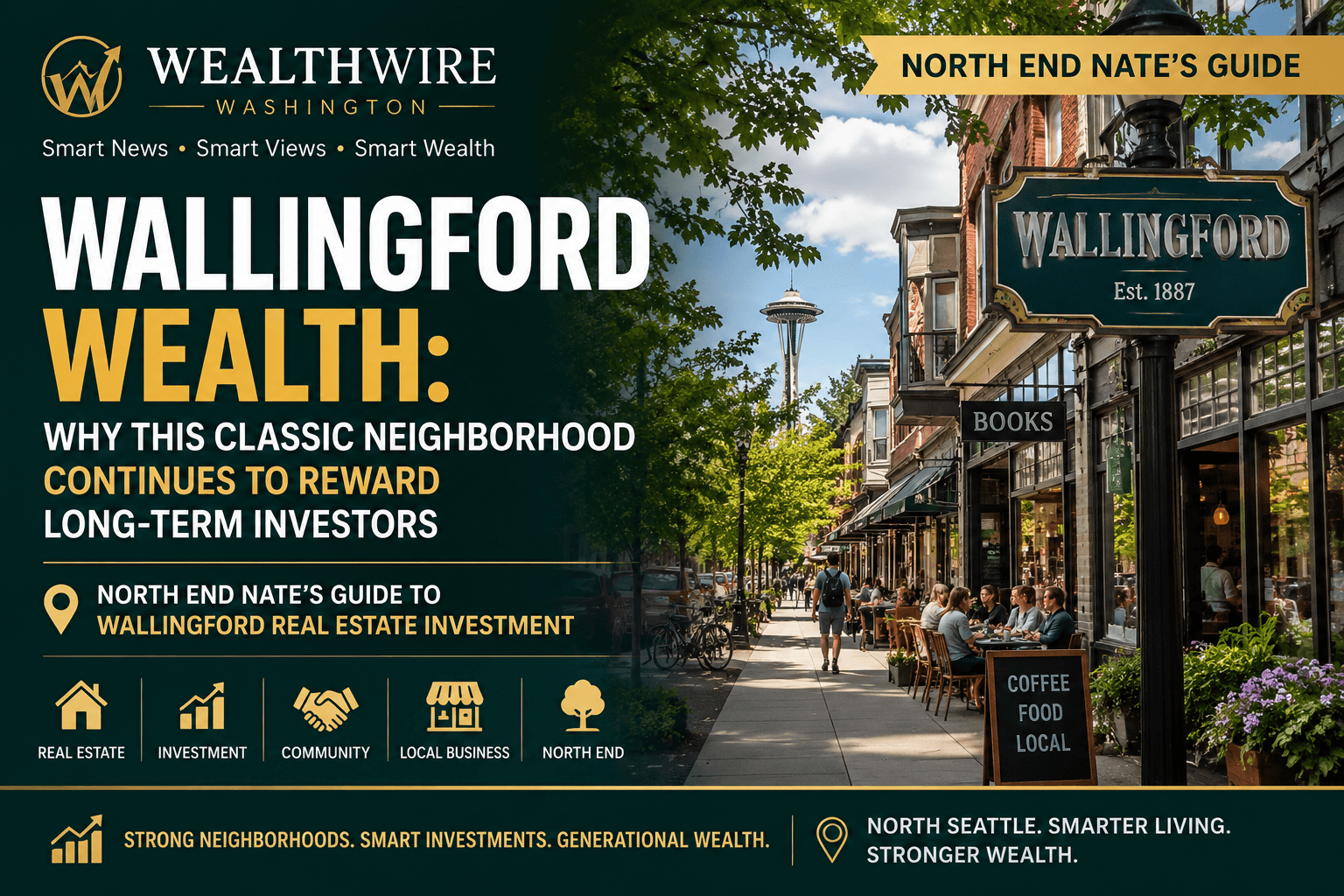
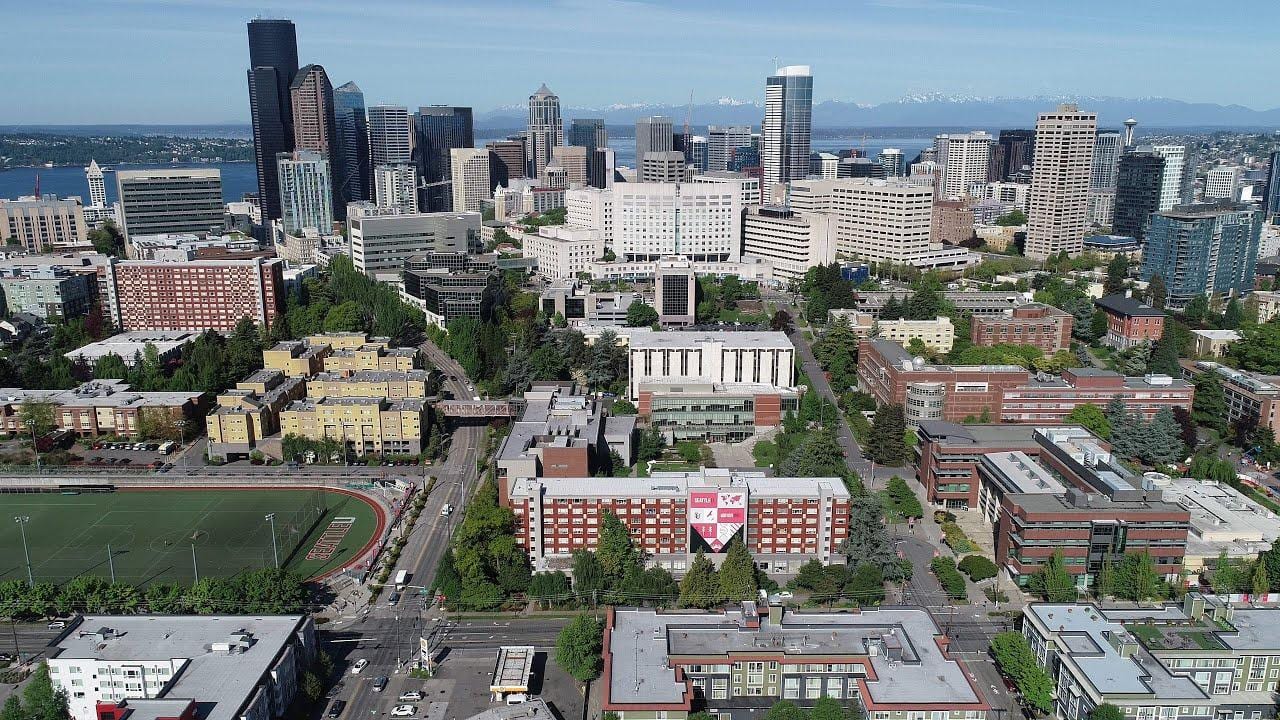
Wallingford has earned its reputation as one of Seattle's most desirable neighborhoods by balancing historic charm with long-term economic resilience.
Tree-lined streets, Craftsman homes, walkable shopping districts, proximity to the University of Washington, and easy access to Green Lake and Fremont have helped the neighborhood remain highly competitive even as Seattle's housing market has evolved.
Recent market data shows Wallingford continues to outperform many neighborhoods in home values. During the three months ending May 2026, the median home sale price reached approximately $1.2 million, up 9.4% year over year, while homes sold in about one week, highlighting continued buyer demand despite higher interest rates.
Location Still Drives Long-Term Value
Wallingford's biggest advantage hasn't changed in decades—its location.
Residents enjoy quick access to:
This connectivity makes Wallingford attractive to professionals working in healthcare, education, biotechnology, engineering, and technology.
Rather than depending on one major employer, the neighborhood benefits from several economic centers, helping stabilize long-term housing demand.
Walkability Creates Economic OpportunityOne reason Wallingford continues attracting buyers is its vibrant commercial district along North 45th Street.
Independent restaurants, neighborhood cafés, bookstores, fitness studios, specialty retailers, and professional services create an environment where residents can accomplish much of their daily routine without driving.
Urban planning research consistently shows that neighborhoods with strong walkability and local business activity tend to command higher property values over time because convenience and neighborhood vitality increase demand.
More Than Just Buying a HomeInvestment isn't limited to purchasing property.
Many homeowners continue adding value through:
These improvements can increase both livability and long-term resale appeal while adapting older homes to modern lifestyles.
Small Business Opportunities Continue GrowingWallingford's strong neighborhood identity also supports entrepreneurship.
Independent coffee shops, wellness businesses, creative agencies, boutique retail, tutoring services, and professional consulting firms continue to thrive by serving residents who intentionally support local businesses.
Recent restaurant openings and continued commercial investment demonstrate that businesses still see Wallingford as an attractive place to grow despite broader economic challenges.
Entrepreneurs using AI-powered marketing, customer relationship management, appointment scheduling, and content creation tools are lowering startup costs while reaching customers more efficiently than ever before. Think Beyond AppreciationSuccessful real estate investing isn't simply about hoping prices rise.
Wallingford illustrates how neighborhood wealth is built through:
These qualities help neighborhoods remain desirable through changing market cycles.
What This Means for YouWallingford continues proving that long-term investing isn't about chasing the newest neighborhood—it's about recognizing places with enduring fundamentals. Whether you're buying your first home, renovating an existing property, or opening a neighborhood business, Wallingford offers the kind of stability that can support wealth-building for years to come.
North End Nate's Wealth Tip: Great investments aren't just measured by appreciation. They're measured by how well a neighborhood continues attracting families, entrepreneurs, and community investment decade after decade. |
84 Comments
Join the conversation
The diversity of economic centers point is something I wish more people understood about real estate. One-employer towns or neighborhoods are risky. Having UW, SLU, downtown, and healthcare all nearby is genuinely protective.
Luis EspinozaThis is such an underrated point. I've seen neighborhoods in other cities crater when one big employer downsizes or relocates. Having that many different demand drivers is basically built-in insurance. More people should factor that into how they evaluate a neighborhood.
Bought here in 2018 and people thought we were overpaying at the time. Looks a lot different now. Wallingford is the kind of neighborhood that rewards patience and staying put.
Karen McAllisterHeard the same thing from our neighbors who bought around that time. Everyone second-guessed themselves a little at those prices. But Wallingford specifically just keeps drawing people in — there's not really a version of Seattle where this neighborhood stops being desirable.
We toured about a dozen homes in Wallingford before buying elsewhere and even then we second-guessed ourselves constantly. The character of those old houses on the tree-lined streets is genuinely hard to walk away from.
Those tree-lined streets and Craftsman character are precisely what the article points to as the kind of historic charm that's very difficult to replicate — so your second-guessing makes complete sense!
The 'North End Nate's Wealth Tip' at the end is honestly pretty solid advice. It's easy to chase whatever neighborhood is buzzy right now but the ones with deep fundamentals are where real long-term value lives.
Small business owner here. Opened a coffee shop near 45th two years ago. The neighborhood regulars are what keep us going. There's a genuine loyalty to local here that I haven't seen anywhere else in Seattle.
Walked by three open houses last weekend out of curiosity and all three had lines. This is not a market where you show up, take your time, and think it over. You have to be ready to move fast.
The school access piece matters more than people realize when it comes to long-term value. Families with kids specifically seek this area out and that keeps demand really consistent across different economic cycles.
You're absolutely right, and it's worth emphasizing — stable school access is one of the key reasons Wallingford sustains demand across economic cycles rather than spiking and dipping like trendier neighborhoods.
The healthcare workers angle is real. Several colleagues who work at UW Medical commute from Wallingford and they all say the same thing — close enough to work but feels like a real neighborhood when you get home.
We did landscaping and a front porch rebuild last summer after seeing what curb appeal was doing for comps on our block. Buyers in Wallingford have high expectations and the details really do show up in offers.
Nina CarlisleTotally agree on the curb appeal thing. We repainted our exterior and redid the garden beds before listing and our agent said it made a real difference in how buyers showed up mentally. In Wallingford people are already emotionally invested before they even walk in the door.
Green Lake, Fremont, UW all within easy reach plus decent I-5 access. Hard to think of another Seattle neighborhood that checks as many boxes location-wise. The price reflects that reality.
We've been trying to buy in Wallingford for over a year now and losing every offer in the first week is exhausting. The market is great if you already own here. Getting in is a whole different story.
Theresa JohanssonWe went through the same thing in Phinney Ridge before finally landing something. It's genuinely demoralizing to lose five or six offers. Hang in there — we eventually got lucky on one that sat an extra few days due to a disclosure issue.
That one-week median sale time is real, and we don't want to gloss over how genuinely difficult it is to break in — persistence, strong pre-approval, and a local agent who knows the inventory early can make a meaningful difference.
I appreciate that the piece doesn't just focus on appreciation. The livability factors are what make an investment sustainable. A neighborhood people actually enjoy living in will always have demand.
The comparison to other Seattle neighborhoods is striking. I've watched areas that seemed equally hot ten years ago flatten out while Wallingford just keeps going. The location fundamentals really do matter more than hype.
Stayed in Wallingford after graduating from UW because I just couldn't bring myself to leave. Five years later I'm renting but saving aggressively. This neighborhood just gets into your bones.
'North End Nate's Wealth Tip' at the end is giving me real estate newsletter vibes lol. The information is solid but that branding is a choice.
mike_wallingfordHa, right? Felt like I was about to be asked to subscribe for $9.99 a month. Content is genuinely useful but yeah the personal branding at the end is a little much for a local news piece.
Fair point — the branding is definitely intentional, though we'll take 'real estate newsletter vibes' as a compliment given that the goal is exactly that kind of practical, no-fluff guidance!
Worked at a restaurant on 45th for three years. The foot traffic there is consistent in a way that other neighborhoods just aren't. Locals come out regularly and that's what keeps independent businesses alive.
Chris HendricksThat consistent foot traffic is no accident either — it's because the neighborhood is actually set up for walking. Wide sidewalks, the layout of the blocks, stuff like that. A lot of commercial strips in Seattle just don't have that same draw even if the businesses are good.
The energy efficient improvements point is timely. We just finished adding heat pump heating and solar panels. The utility savings are real and a couple neighbors have mentioned it came up positively when they were scouting comparable homes.
I do find it slightly frustrating when articles like this make Wallingford sound accessible to regular buyers when the reality is you need significant income or family wealth to get into this market now.
We did a full kitchen renovation last year and our agent told us it was one of the smartest things we could do before listing. Wallingford buyers expect updated kitchens in these older Craftsmans. She was right.
Your agent gave you excellent advice — as we note in the piece, kitchen renovations are among the improvements that most directly boost both livability and resale appeal in Wallingford's older Craftsman stock.
We moved here specifically for the schools and the walkability when our kids were little. They're in high school now and I'd make that same decision all over again. The neighborhood really delivered on its promise.
9.4% year over year is honestly remarkable given where interest rates have been. Most markets have cooled significantly. The fact Wallingford keeps climbing tells you something real about how much buyers still want in.
My sister opened a tutoring business out of her home in Wallingford and within six months she had a full client list. The concentration of UW families and professionally employed households is a gold mine for that kind of service.
The part about not depending on one major employer is a really good point that doesn't get talked about enough. Neighborhoods tied to a single company are way more vulnerable when things shift.
The ADU section caught my eye. Seattle's zoning changes have made it a lot more practical to add one and in Wallingford where lots are decent sized it seems like a really smart play for existing homeowners.
People underestimate how much the community involvement piece matters. The neighborhood association events, the street fairs, the local activism around preserving character — all of that feeds back into why people want to live here.
We had our house on the market for exactly six days before accepting an offer over asking. It was our first time selling and honestly the speed was a little shocking even knowing the market was strong.
Moved here from Portland two years ago and the walkability alone sold me. My car barely moves on weekends. The 45th Street strip has basically everything you need for day-to-day life.
The transit access doesn't get mentioned enough. Multiple Metro corridors means you can actually live here without a car if you want to. That matters a lot to a growing number of buyers.
First time buyer here, currently house hunting. Wallingford is my dream neighborhood but $1.2 million median is a stretch. Hoping to find something that needs work so I can build equity through improvements.
The proximity to UW keeps demand really stable in a way other neighborhoods don't have. Faculty, staff, grad students, hospital workers — there's always a steady pool of buyers and renters around here.
Worth noting that Fremont being right next door basically doubles your walkable options. Between the two neighborhoods you have access to some of the best independent restaurants and shops in Seattle.
The bookstore on 45th is one of my favorite places in the entire city. That kind of independently owned anchor business creates a vibe that big box retail just can't replicate. Glad it keeps thriving.
Lived on Wallingford Ave for over 20 years. The neighborhood has changed a lot but the fundamentals the article talks about — walkability, schools, location — those have honestly never wavered. Solid place to be.
Grew up near Green Lake and my parents always talked about how Wallingford was the neighborhood to get into if you could swing it. Thirty years later and that advice still holds up apparently.
We did a basement remodel two years ago and turned it into a proper home office. Given how many people are still working hybrid it was one of the smartest things we did. The space pays for itself.
The mention of AI tools lowering startup costs for local entrepreneurs is interesting. I've seen a couple new small shops open recently that seem to be running really lean operations. Makes sense.
Been renting here for four years while saving to buy and honestly the competition is exhausting. But I keep trying because I know this is where I want to be long term. The lifestyle here is worth fighting for.
I appreciate the shoutout to local businesses but let's be honest — a few beloved spots on 45th have closed in the last couple years too. It's not all sunshine. Rising commercial rents hit small businesses hard here just like everywhere else.
kevin_nwThis is such a fair point. That little wine bar we loved closed last spring and the space has been empty since. Commercial rent is brutal right now and it's def not just a Wallingford problem. Hoping something local fills it and not another chain.
That's a fair and important counterpoint — rising commercial rents are a real pressure on small businesses everywhere, and the article's mention of 'broader economic challenges' was intended to acknowledge exactly that tension.
The point about not depending on one major employer is really important. Neighborhoods that are tied to one company or one industry can get burned. Wallingford's diversity of economic centers is a real strength.
As someone who works in biotech near Lake Union, Wallingford was a no-brainer. Easy commute, great food options, walkable. My coworkers who bought here before me are now sitting on serious equity.
The Craftsman homes on the tree-lined streets are just beautiful. There's a cohesion to the neighborhood aesthetically that you don't find in a lot of Seattle's newer areas. That character has real monetary value.
Melissa CraneThe cohesion is real. I've noticed that even the newer infill construction around here tries to match the character of the older homes. It's not always perfect but at least people are trying, which tells you something about how much the aesthetic identity matters here.
We added an ADU above our garage two years ago and it completely changed the math on our property. Wallingford buyers actually see it as a major plus, not just extra square footage. Great investment for us.
Margot W.Which route did you go — permitted full build or a simpler conversion? We've been going back and forth on doing the same thing and would love to know how the permitting process went for you.
Lost my bid on a place near Stone Way last spring. Had a solid offer and still didn't get it. One week on market is being generous in some cases — some of those places were gone in days.
James OkaforSame thing happened to a friend of mine over near Meridian. Offer was over asking, waived inspection, and still lost out. The one week stat might even be the slower cases. Some of them don't even feel like they were ever really on the market.
I opened a small wellness studio near 45th three years ago and the neighborhood support has been incredible. People here genuinely try to shop and spend locally. Makes a real difference for small businesses.
The South Lake Union connection is something newer buyers really value. A lot of tech and biotech folks want to be close to work but also want a real neighborhood feel. Wallingford threads that needle.
Homes selling in about one week even with higher interest rates says everything you need to know. Buyers are still very motivated to get into this neighborhood specifically.
Paul EriksonExactly. One week with rates still elevated is not a soft market by any stretch. People clearly aren't waiting around hoping prices drop here — they're just finding a way to make it work.
We renovated our kitchen last year and the return on it already shows in the comps on our block. Small improvements in Wallingford really do pay off because buyers expect move-in quality at these prices.
North 45th has held up better than a lot of commercial strips in Seattle. When I see independent places still opening there it tells me the neighborhood isn't just coasting on reputation.
Green Lake being a five minute walk away genuinely changes your daily life. We're out there almost every morning. That kind of access to open space is something you just can't replicate and buyers know it.
The North 45th Street corridor is seriously underrated. I can walk to my coffee shop, the bookstore, my gym, and grab dinner all within a few blocks. That kind of convenience is genuinely hard to find in Seattle.
trish_seattleHonestly that's what I miss most since moving to Capitol Hill. The 45th corridor just has a different feel — it doesn't try too hard. Stuff is actually useful and local, not just trendy pop-ups.
That daily walkability loop you're describing — coffee, bookstore, gym, dinner — is exactly the kind of neighborhood vitality the article highlights as a driver of long-term property values, not just lifestyle quality.
I love Wallingford but let's be honest, a lot of the charm is getting harder to access for regular working people when the median is 1.2 million. Not everyone can buy in anymore.
The schools are underrated in this conversation. Hamilton and Lincoln drawing families is a big part of why people put down roots here rather than just passing through.
We did an ADU in our backyard two years ago and it has absolutely been worth every penny. Not just for rental income but for what it did to the resale value when we looked into refinancing.
$1.2 million median is wild to think about. I remember when these houses were 'just' in the 700s and everyone thought that was already too high. The demand clearly isn't slowing down.
Derek VollmanRight?? I grew up in the area and my parents bought their place in the early 2000s for under 400k. It genuinely blows my mind every time I see current listings. Different world entirely.
The proximity to UW is a huge factor people don't always mention. Between faculty, staff, and students, there's a constant pool of people who want to be in this area. Keeps demand really steady.
Priya RaghavanExactly this. And it's not just students — UW Medical Center alone employs thousands of people who want to live nearby. That's a completely different demographic from the undergrad crowd and they're serious long-term renters and buyers.
$1.2 million median is a lot to wrap your head around. I grew up here and my parents bought their place for under $200k in the 90s. Wild how much has changed.
Moved here from Portland two years ago and the walkability on 45th is genuinely one of the best things about living here. I can do groceries, grab coffee, and hit the bookstore all in one trip without touching my car.
jenna_pdx_transplantThat's pretty much my Saturday routine honestly. The fact that you can string all of that together on foot is something you don't fully appreciate until you've lived somewhere where you can't. Glad you made the move, it's a good street.
We bought our Craftsman on 44th back in 2011 and it's been the best financial decision we ever made. The neighborhood has only gotten better over the years, and that 9.4% year-over-year jump honestly didn't surprise us one bit.
A 2011 purchase in Wallingford is about as textbook an example of 'enduring fundamentals' as it gets — you recognized exactly what the article describes before most people were talking about it.
Sandra K.2011 was such a smart time to buy in this area. We got in around 2014 and already feel like we got lucky. Can't imagine what it would take to buy here for the first time today though.
One week on market is no joke. We lost three houses in Wallingford before we finally got one, and every single time we were outbid within days. The demand is very real.
We bought our Craftsman on 44th back in 2011 and watching the neighborhood grow without losing its character has been really special. The 9.4% year-over-year jump is wild but honestly not surprising given how much demand there still is.